
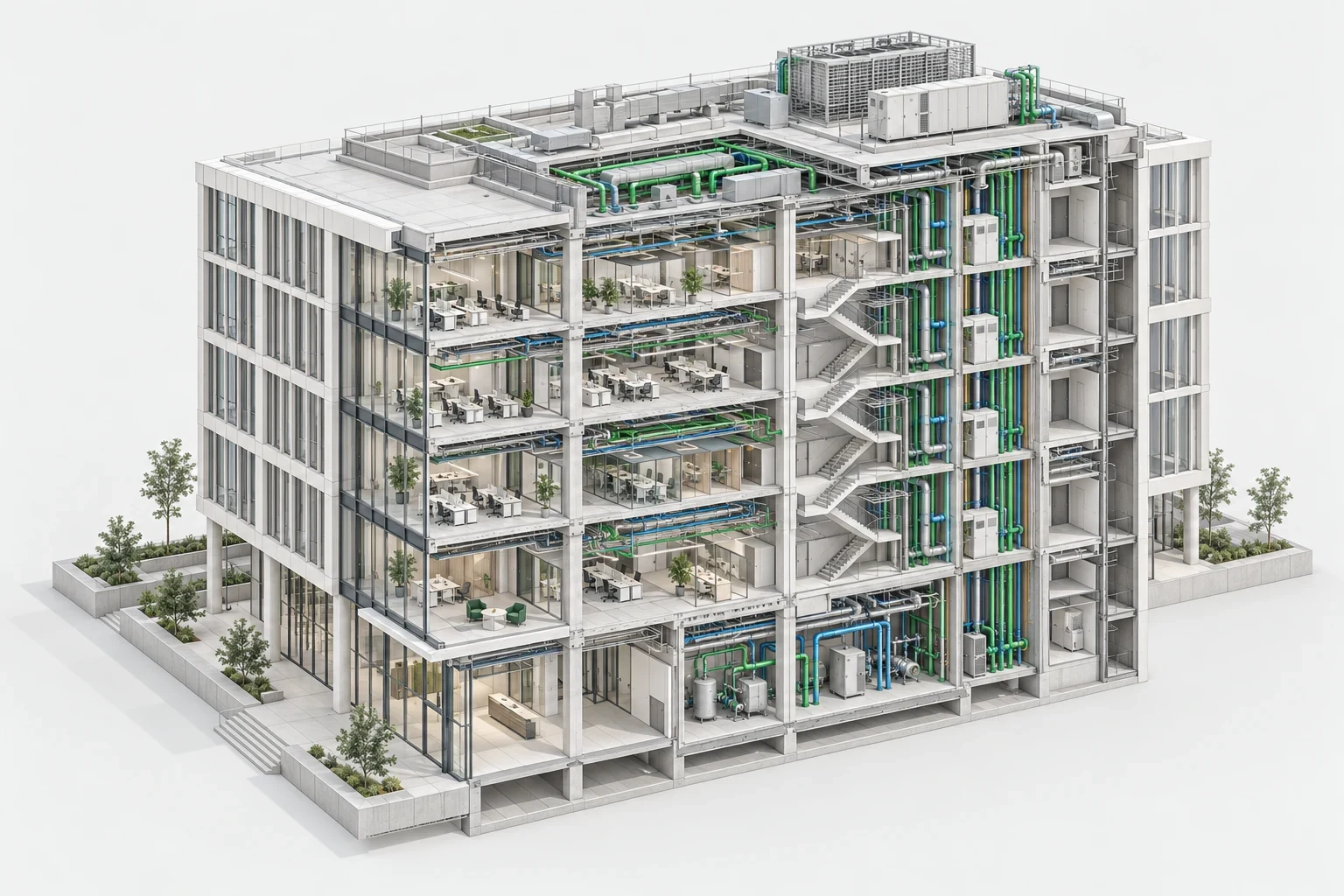
BIM combines a digital representation of an asset with processes for managing its information. TIM is the term used for information modelling technologies in Russian practice. A model’s practical value depends on project objectives and data quality, not just detailed 3D geometry.
01Model objectives
Define intended uses before modelling: coordination, documentation, quantities, procurement or operations. Each use requires appropriate geometry, element properties and validation procedures.
Record these requirements in the brief and BIM execution plan. This avoids both missing information and detail that serves no client decision.
02Data exchange and revisions
Design teams may maintain separate discipline models that are combined for coordination. A common data environment establishes naming, status, access and issue procedures.
IFC supports open information exchange between applications. Exported files should be checked for coordinates, element scope and required properties.
03Coordination and quality
Model review covers geometric clashes and project-specific rules. Maintenance zones, openings and equipment loads need separate attention. Each issue is assigned an owner, status and due date.
A clash-free model does not by itself establish design readiness. Calculations, regulatory checks and client approvals remain necessary.
04What to agree with the client
- Model uses and required information.
- Discipline scope and ownership of shared interfaces.
- Formats, software versions and exchange procedures.
- Validation criteria and issue management.
- Handover requirements for the next stage or operation.
Mandatory information modelling requirements are assessed against current regulations and the characteristics of the individual project.
Sources: IFC standard — buildingSMART
Discuss your project
Share the building use, area and current project stage. We will define the design, procurement and delivery scope.
Contact the practice →